
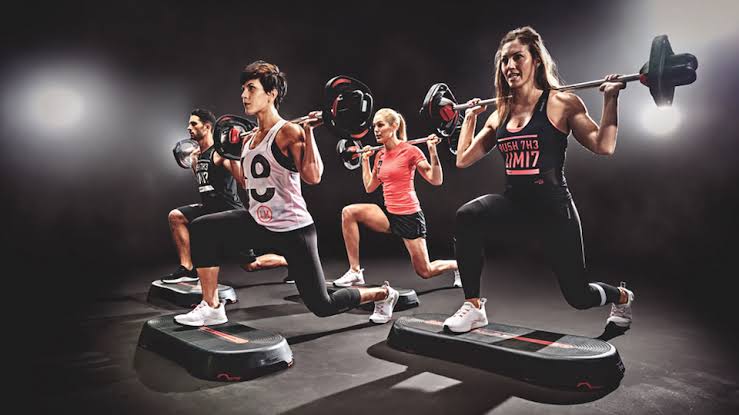

Home dumbbell sessions can support strength endurance and preserve training consistency, but they do not reproduce every feature of a bodypump class. Equipment, choreography, group timing and exercise transitions all influence the studio experience.
The most useful home alternative preserves selected training goals without pretending that two different environments are identical.
Dumbbells Can Recreate Major Movement Patterns
Squats, lunges, presses, rows and arm exercises can all be performed with dumbbells. This allows home training to cover many of the movement categories used in class.
A participant can organise these exercises into moderate- or high-repetition sets. Tempo and pauses can also be prescribed.
The basic muscular work can therefore remain relevant even when a barbell and studio are unavailable.
Independent Arms Change the Demand
A bar connects both hands, while dumbbells allow each arm to move separately. This can expose side-to-side differences and require additional control.
The pressing path may feel more natural for some participants. However, balancing two weights can increase the coordination demand.
The dumbbell version is not always easier or harder. It is mechanically different.
Home Loads May Be Limited
Many home setups contain only one or two dumbbell pairs. The available weight may be too light for squats and too heavy for shoulder exercises.
Tempo, range and unilateral movements can make light loads more useful. A participant can use split squats, slow lowering and pauses.
These strategies extend the equipment’s usefulness without creating unlimited progression.
Choreography Is Difficult to Reproduce Alone
BodyPump connects movement with music and changes tempo throughout each track. This structure controls repetition speed and creates a shared rhythm.
A home programme can prescribe counts, but maintaining them independently requires attention. The participant may speed up when tired or shorten the planned pauses.
Using a timer or written tempo can improve consistency, though the group experience remains different.
Class Transitions Create Cumulative Fatigue
Studio tracks move through a defined sequence with limited time to change plates and prepare. This affects how fatigue accumulates.
At home, participants may take longer rests while choosing exercises or checking instructions. The same movements then feel less dense.
A home plan should define rest periods if strength endurance is the goal.
Instructor Cueing Cannot Be Fully Replaced
A written plan or recorded video can demonstrate exercises, but it cannot respond to the participant’s movement in real time.
The participant needs established technique and clear scaling rules. Complex exercises may be unsuitable for unsupervised home practice.
Personal coaching or studio instruction can help build the skills later used independently.
The Group Environment Changes Effort
Music, instructor energy and other participants can support persistence through difficult tracks. Home sessions lack this shared momentum.
The participant may stop early or extend rest when no external structure exists. This is not simply a lack of discipline. The environment provides fewer behavioural cues.
Clear set endpoints and a short programme reduce this problem.
Noise and Space Matter in HDB Homes
Dropping weights, jumping and moving equipment can disturb neighbours. Exercises should remain controlled and low impact.
A mat may reduce contact noise, but it should not create an unstable standing surface. Furniture used for support must be secure.
Most movements should fit within a compact area without requiring wide travel.
Home Work Can Target Class Weaknesses
A home session does not need to copy the complete class. It can address one or two capacities that limit performance.
For example, participants can practise controlled rows, push-ups or split squats. This targeted work may improve later class quality.
The volume should be low enough to avoid creating excessive soreness before the next studio session.
Track Home Fatigue
Home workouts still contribute to the weekly training load. Participants should record sets, repetitions, resistance and effort.
A demanding dumbbell session before class may explain why familiar weights feel unusually heavy. Treating home work as invisible leads to poor recovery decisions.
Both environments belong to one programme.
Use the Studio for Its Advantages
At True Fitness Singapore, members can access instructor-led choreography, suitable barbells, plate changes and a dedicated class environment.
Home sessions provide flexibility during travel, bad weather or time pressure. The studio provides the parts that are difficult to recreate in a small space.
Each environment should perform the role it handles best.
Replicate the Goal, Not Every Detail
Home dumbbell work can preserve movement patterns, muscular endurance and routine. It cannot fully reproduce barbell handling, group timing, studio equipment or live instruction.
A successful home plan accepts these differences. It provides a measurable training stimulus that supports the class rather than becoming an inaccurate imitation of it.

Comments are closed.